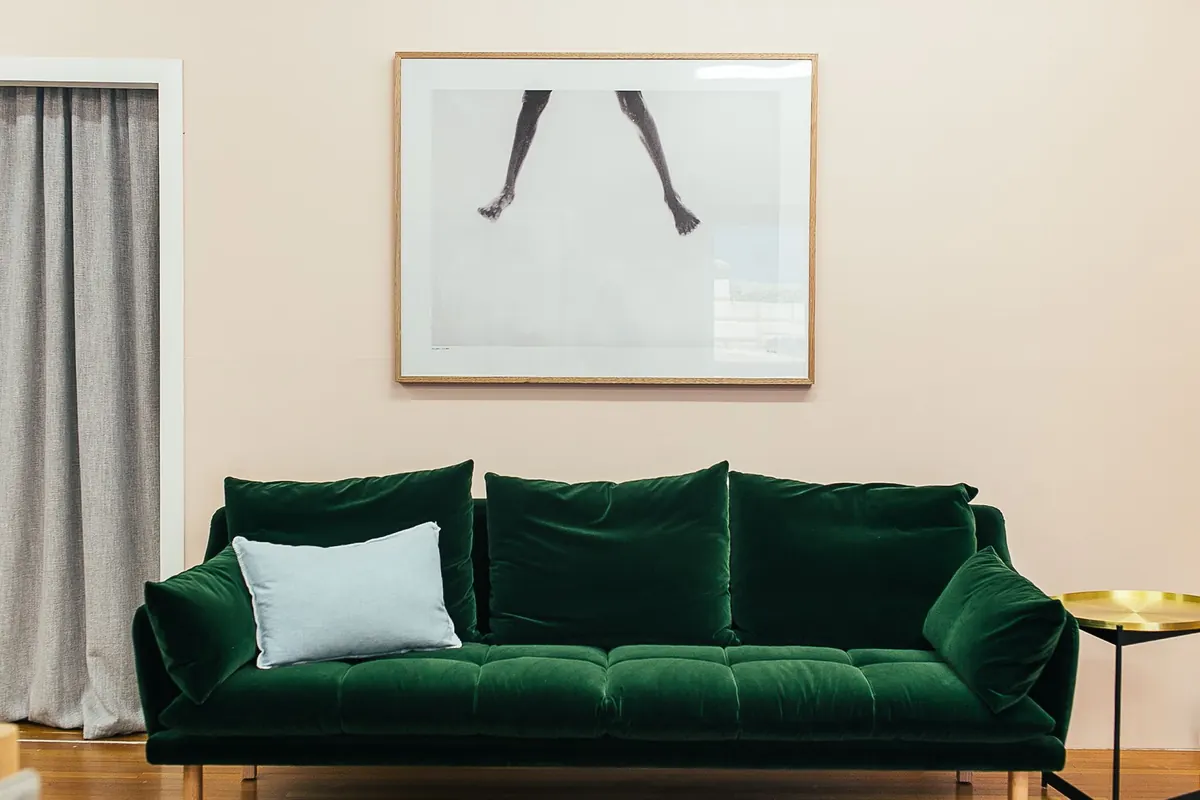
A sofa is the piece of furniture you'll spend the most time with and the one that's hardest to send back. It anchors the room, sets the tone for everything around it, and has to survive years of film nights, spilled coffee and the occasional unscheduled nap. Most people buy one on a showroom high — it looked wonderful under the lights — and only discover the problem when it's wedged in a stairwell. A little measuring and a lot of sitting will spare you that.
Start with a tape measure and a notebook, not a website. Write down the length of the wall where the sofa will sit, the width and depth of the room, and the height and width of every doorway it must pass through on the way in. Then walk the route yourself: front door, hallway, the tight corner by the kitchen, the stairs, the lift if you have one. Sofas don't bend, and a low ceiling above a staircase has ended more deliveries than any other obstacle.
While you're at it, note the things that don't move: radiators, skirting boards, plug sockets you'd rather not block, a door that swings into the space you had in mind. It's easy to plan a sofa for a wall that turns out to be 40 cm shorter than you remembered because a radiator lives there.
Scale is where most first purchases go wrong. A sofa that's too small makes a generous room feel like a waiting area; one that's too large turns a snug living room into an obstacle course. As a starting point, aim for a sofa that covers roughly two-thirds of the wall it sits against, though nothing beats seeing the proportion in the room itself.
A cheap trick that works better than any app: mark the footprint on the floor with masking tape, or cut a cardboard template to size. Leave it there for a day. Walk around it, sit inside it, see how it feels in the morning light. You'll notice within an hour whether it crowds the doorway or leaves a lonely gap at one end.
Watch the relationship with the rug and coffee table too. Front legs resting on the rug ties the seating together. Leave 40–45 cm between the sofa edge and the coffee table — enough to reach a cup, not enough to feel like a corridor.
Before you choose a shape, decide how the room is used. A long, narrow room often wants the sofa pulled away from the wall, floating behind a console table, with a chair or two opposite. Pushing every piece against the skirting boards is the fastest way to make a room feel smaller than it is. If conversation and television both matter, angle the seating towards each other rather than lining it up straight in front of the screen.
Keep walkways clear. Around 75–90 cm between the sofa and the next solid object is comfortable for most adults; less than that and people start turning sideways to pass. If the room is a through-route to the kitchen, protect that path above all else.
Two-seaters work well in small rooms and as a second piece. Three-seaters are the default for a main living room, but check the seat width per person — three narrow seats are less useful than two generous ones. Corner sofas and chaises are excellent for lounging but demand corner space; a chaise on the traffic side of a room becomes a daily annoyance. Modular pieces cost more but let you reconfigure when you move.
Nobody can tell you which sofa is comfortable. A deep, soft seat that swallows a tall reader will leave a shorter sitter perched on the edge with their feet dangling. Sit for at least ten minutes — longer if the shop will allow it — in the posture you actually use at home. Read something. Don't just perch for ten seconds and nod.
Seat height matters more than most people expect: roughly 40–45 cm from floor to the top of the seat cushion suits a wide range of adults, and a little more if knees or hips are stiff. A seat depth of around 55–60 cm is a safe middle ground; deeper than that and shorter sitters need a cushion behind them. Check that your shoulders are supported by the back, and that the arms sit at a height you'd genuinely rest an arm on.
Ask what the cushions are filled with and how the frame is joined. Foam holds its shape and needs little attention; feather and fibre feel softer but need plumping and settle over time; pocket springs add a firmer, more even seat. If you like a sofa to look tidy without daily work, lean towards more structured cushions. If you want to sink in, accept the plumping.
Take a fabric swatch home. A colour that reads as calm grey in a shop can look cold or faintly green under your own windows, and a pale sofa in a bright room feels very different after dark. Look at the swatch in morning light, at night under lamps, next to your rug and curtains.
Then check the practical details: are the covers removable and washable, do the legs come off for delivery, is there a matching armchair and do you actually want one? Ask about the guarantee in plain terms — what it covers, for how long, and who you call if a seam fails.
Measure the room and the delivery route. Tape the footprint on the floor and live with it for a day. Sit on the sofa for ten minutes in your normal posture, not the polite one. Take the fabric swatch home and look at it after dark. Confirm that the covers come off, the legs come off and the guarantee covers the frame. Then check one last thing: that you like it from the doorway, not just from the shop floor.
If all of that adds up, buy it with confidence. A sofa that fits the room, the route in and the way you actually sit will become the piece you stop noticing — in the best possible way.
Photo: Rachel Claire / Pexels
A practical room-by-room walkthrough for open houses, focused on spotting red flags, awkward layouts and maintenance...

A simple room-by-room routine that keeps a home tidy in fifteen minutes a day, so weekends stay free for the things...

Renting and buying in a mid-sized Italian city involve very different upfront bills, monthly costs and exit options....

News and insights for your home.