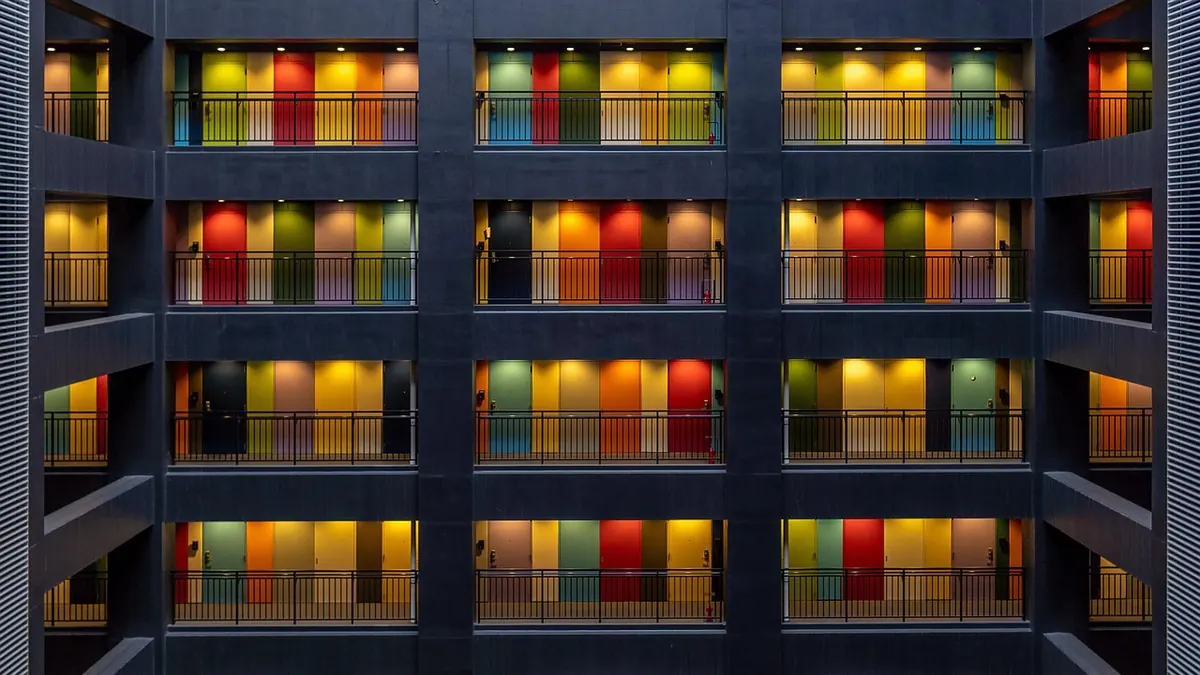
A small apartment rarely feels cramped because of its square metres. It feels cramped because things arrive without a home and settle on the nearest flat surface. A chair becomes a wardrobe, the kitchen counter becomes a filing cabinet, and the hallway turns into something you edge through sideways while holding a shopping bag.
The fix is not more boxes. It is deciding, room by room, where each category of object lives, and then using the full height and depth of the space you already pay for. What follows is a beginner's route through that process: which zones to plan first, the vertical space most renters ignore, and the furniture decisions that quietly buy back floor.
Storage works when it matches behaviour. Before buying anything, walk through your home and name what actually happens in each spot: shoes come off here, coffee is made there, laptops open at this table. Then place storage within arm's reach of the activity it serves. A drawer of charging cables two rooms away from the desk will stay empty while the cables pile up on the desk itself.
The second principle is frequency. Sort objects into three rough groups: used daily, used weekly, used a few times a year. Daily items belong between knee and eye height, where you can reach them without a stool. Weekly items can go slightly higher or lower. Seasonal things — the winter duvet, the suitcase, the box of decorations — go to the top shelf or the space under the bed, where a small step ladder is an acceptable cost of entry.
Most people do this backwards: the things they use most get pushed into awkward corners because the convenient shelves were filled first by whatever was unpacked earliest.
You cannot choose furniture for a small flat by eye. Measure, write the numbers down, and take the list with you.
Look at any room and draw an imaginary line at head height. Almost everything you own sits below it, and almost everything above it is air. That gap is the largest unused resource in a small apartment.
Start with the obvious vertical surfaces: the strip above the fridge, the wall above the toilet, the space above a doorway, the side of a tall cupboard. A narrow shelf over a door takes coats, hats or spare towels and costs you nothing in floor space. Deep shelves above the fridge hold the things you need twice a year.
A few rules keep vertical storage from turning into visual clutter. Keep shelves shallow — around 30 cm is enough for most books, jars and folded linen, and shallow shelves mean nothing gets lost at the back. Reserve the highest level for light, rarely used, attractive-enough items, because whatever sits at ceiling level is the first thing the eye finds when it enters the room. And group by category rather than by size, so the top shelf is not a museum of unrelated objects.
The same logic applies inside cupboards. An added shelf, a stack of lidded boxes, or a tension rod under the sink for spray bottles can double the usable capacity of a cabinet without touching a wall.
In a small home, every piece of furniture should do at least one job beyond looking nice. A bench by the door with a lift-up seat stores shoes and bags. An ottoman holds bedding. A bed frame with drawers, or simply a bed raised on sturdy blocks, turns the space beneath it into a drawer the size of a room. Nesting tables and folding chairs let you host four people and then reclaim the floor.
Height is your ally here too. A tall, narrow bookcase stores twice what a low, wide one does for the same footprint, and tall furniture draws the eye upward, which makes a low ceiling feel less oppressive. Look for depth as well: a 30 cm deep shelving unit against the long wall of a narrow room leaves more walking space than a 45 cm one, and holds nearly as much.
One useful test before any purchase: name the three things it will hold and where those three things live now. If you cannot answer, the item is a future clutter deposit.
The first metre inside the door does more for how tidy a home feels than any other space. If coats, keys and post have no landing place, they migrate through the flat within a day.
Give the entry three fixed points: a hook for the coat you actually wear, a small tray or bowl for keys and wallet, and a basket or shoe rack for the two pairs currently in rotation. Everything else — guest coats, the umbrella collection, the sports bag — goes higher or further in. A mirror above the tray is not decoration; it lets you check yourself while you are already standing there and makes a narrow corridor feel wider.
Deep cabinets are where good intentions go to die. A shelf 60 cm deep holds a front row and a dark hinterland. Fix this with layers rather than volume: stack plates vertically on a rack, put a turntable in the corner so nothing hides behind anything, use lidded boxes as pull-out drawers, and hang a rack on the inside of the cupboard door for lids, foil or spices.
Keep a clear rule for the kitchen: nothing on the counter that does not get used most days. The kettle, the knife block, the oil. Everything else earns a cupboard. And label the boxes you cannot see into — a strip of masking tape and a pen is enough. Unlabelled storage is just tidier hiding.
Most of this is renter-friendly. Tension poles, over-door hooks, freestanding shelving and stacking boxes need no drilling. Where adhesive hooks are the answer, check the weight rating and test one on a hidden patch of wall first, then remove it slowly and gently when you leave.
Before fixing anything to a wall, read your lease or ask; some landlords are relaxed about a few well-placed shelves, others are not, and a short email saves an argument later. Keep the screws and brackets when you move out, and fill the holes properly. If you would rather not touch the walls at all, freestanding tall units and wall-leaning ladders give most of the vertical benefit with none of the risk.
Choose one zone — the entry, one kitchen cabinet, the space beside the bed. Empty it completely. Sort into four piles: keep, belongs elsewhere, donate, bin. Clean the surface, put back only the keepers, and arrange them by how often you reach for them. Live with the empty version for a week before buying anything; the shape of what you actually need becomes obvious, and half the gadgets you were about to order stop looking necessary.
Then keep a running list on your phone of things that keep getting in the way. That list, rather than a catalogue, is the best storage plan you will ever have. Storage is less about furniture than about small habits repeated: one in, one out; a home for everything; and an honest look upward at all that empty air.
Photo: pierre9x6 / Pixabay
A practical room-by-room walkthrough for open houses, focused on spotting red flags, awkward layouts and maintenance...

A simple room-by-room routine that keeps a home tidy in fifteen minutes a day, so weekends stay free for the things...

Renting and buying in a mid-sized Italian city involve very different upfront bills, monthly costs and exit options....

News and insights for your home.